How Much Space Between a Bed and a Desk? Clearances Explained
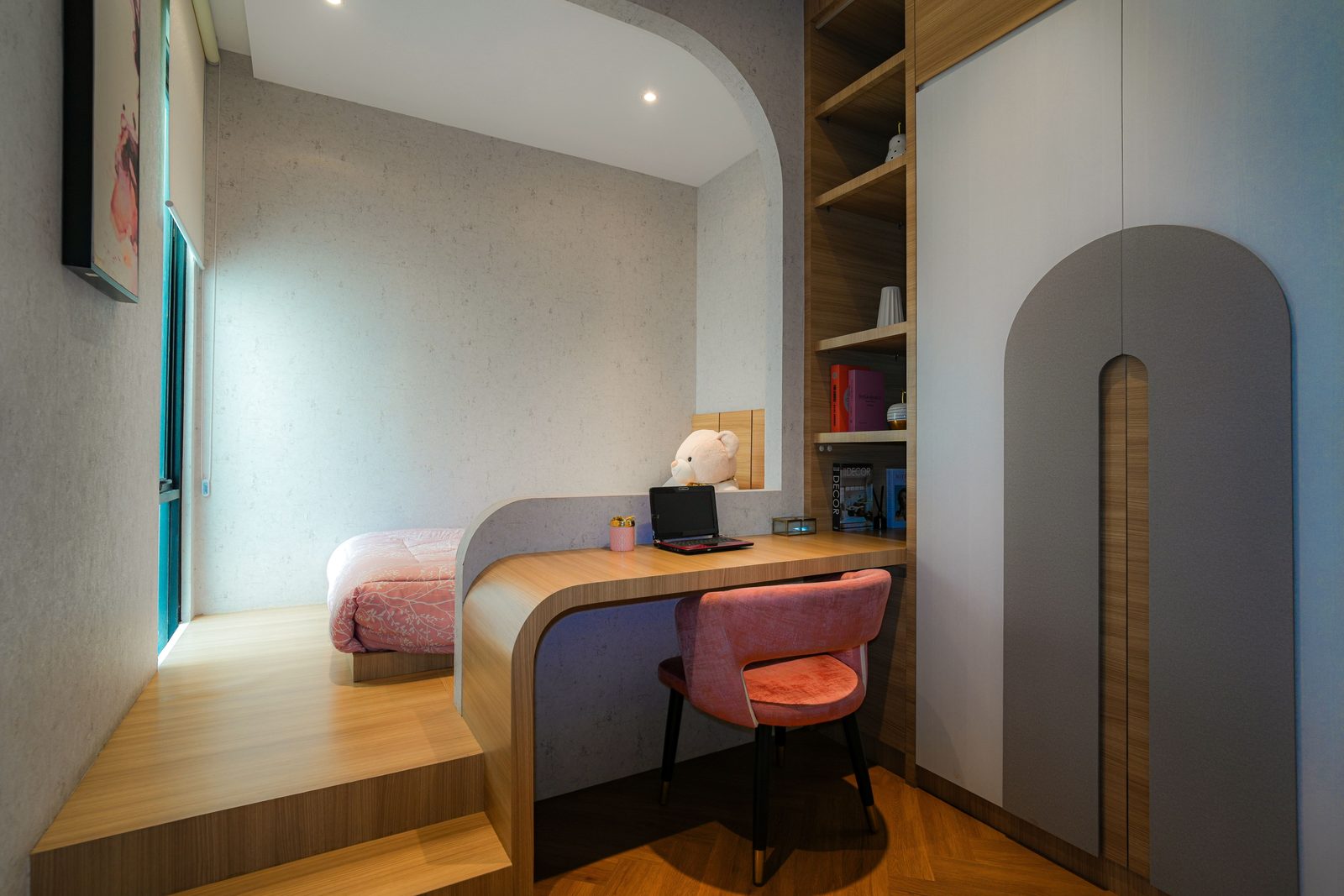
No home rule sets a bed-to-desk gap. A chair in use takes about 30 in, so a 36 in gap leaves 6 in to walk. How to measure yours.

 DeskFootprint
No home rule sets a bed-to-desk gap. A chair in use takes about 30 in, so a 36 in gap leaves 6 in to walk. How to measure yours.
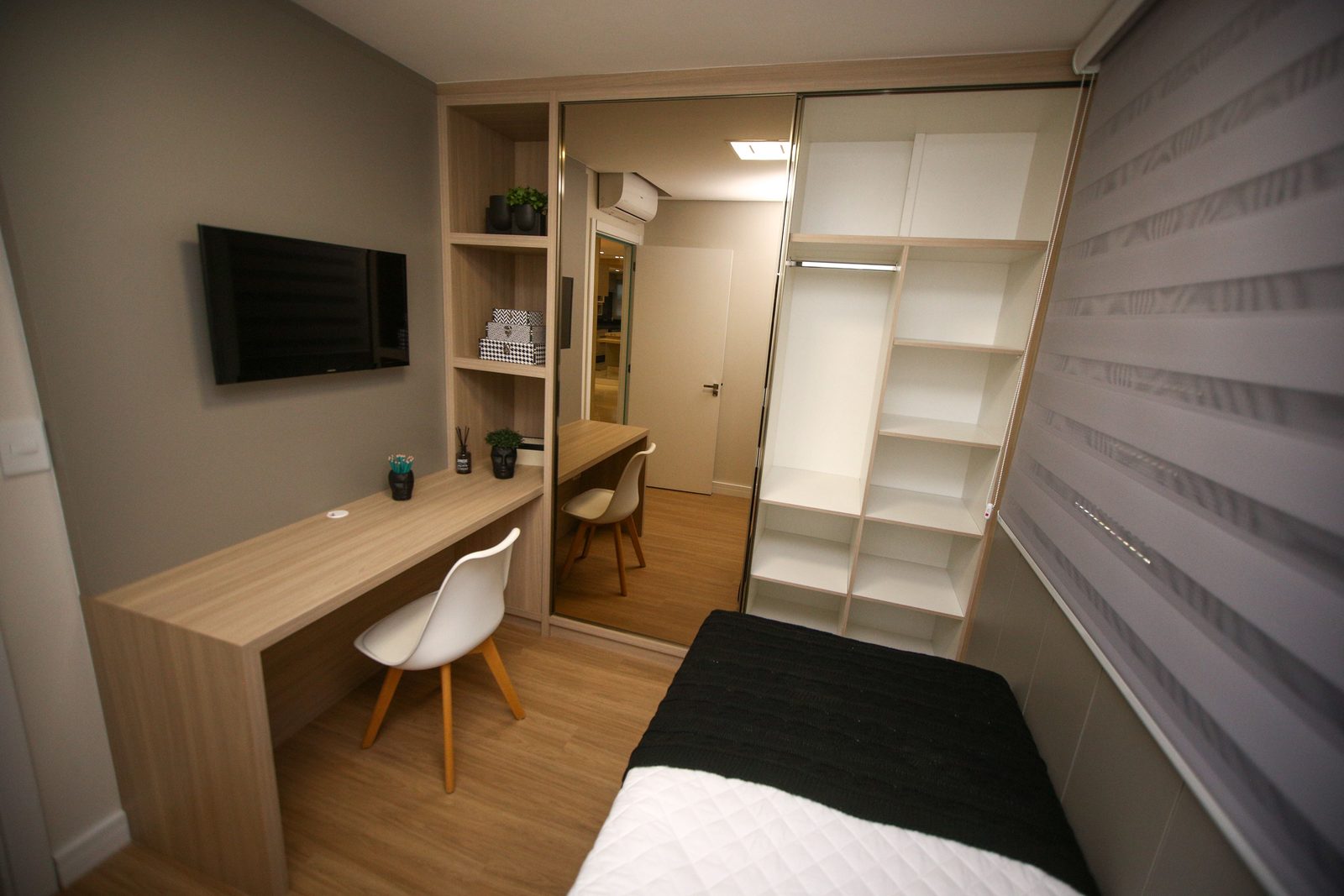
A 48 inch desk fits in a 10×10 room, but facing a queen bed it leaves 6 in once the chair is out. Beside the bed it leaves 66 in.
No standard we found sets a desk depth. OSHA and ANSI/HFES set a 20 in (50 cm) eye-to-screen distance. Here is how to check if 24 in works.
We checked 100 Amazon desks sold as compact. None of the 90 rectangular ones we could confirm is deeper than 60 cm (23.6 in). 40 cm is most common.
Kitchen island carts for small kitchens, compared by published depth folded and open, capacity, and the aisle left under NKBA’s 42-inch guideline.
Folding dining chairs for small spaces, compared by published folded thickness, open footprint, seat height, and capacity, with NKBA clearance math.
Stackable and fold-flat stools for small spaces, compared by published footprint, stack count, folded thickness, and counter vs bar seat height.
Measure first: wall-mounted dining tables for small kitchens compared by published folded depth, open size, and load so your walkway still works.
Best drop-leaf tables for studios, compare published closed vs open depth and width so the walkway survives after dinner.
Best narrow bookshelves under 24″ wide, compare published widths, depths, shelf loads, and anti-tip notes for small apartments.